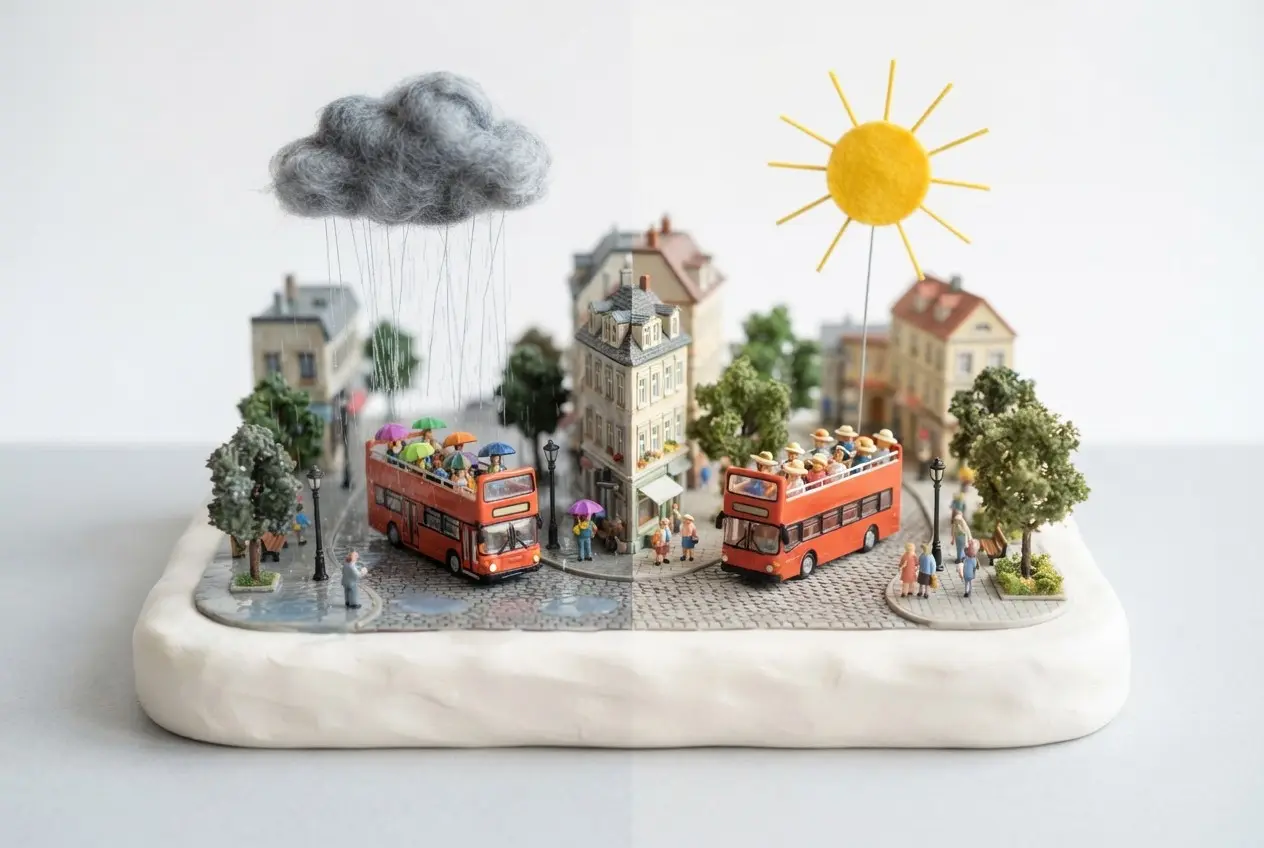
In the rain and in the summer heat

An open top deck is the reason to take this bus, and the weather decides whether you can use it.

  • In rain most people move downstairs, where the windows fog up and the view is a regular bus view.
  • In July and August the top deck at midday is hot and unshaded. Ride early or after 17:00.
  • Waiting times grow in peak season because buses fill up and skip stops.
In the rain and in the summer heat
CityFull loopBus everyVerdict
Amsterdam 65 min25 min Depends
Athens 90 min15 min Depends
Barcelona 120 min10–25 min Depends
Berlin 150 min25–30 min Depends
Brussels 60 min20–30 min Depends
Budapest 110 min10–25 min Depends
Dublin 110 min20–30 min Depends
Edinburgh 70 min10–20 min Worth it
Florence 60 min25 min Depends
Lisbon 110 min40 min Depends
London 150 min15–20 min Worth it
Madrid 70 min15–30 min Depends
Milan 50 min50 min Depends
Munich 60 min20–30 min Worth it
New York 90 min30 min Depends
Paris 135 min10–20 min Depends
Porto 60 min25 min Depends
Rome 90 min15 min Skip it
Seville 75 min20–40 min Skip it
Vienna 75 min20–30 min Depends

Adult prices in local currency, read on the date shown on each city page.

City by city

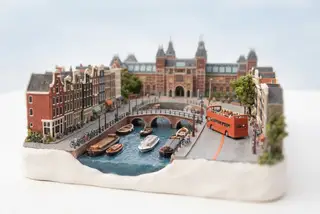
Miniature model of Amsterdam with an orange sightseeing bus

Rain is the one case where the Amsterdam bus beats its rivals in other cities. City Sightseeing says its buses here have closed roofs, because open tops are not allowed under the tram wires.

You stay dry for the whole 65 minute loop. The wait is the weak point: buses come about every 25 minutes and the operator says it may not put signs at its stops, so the stops are unmarked.

Use the City Sightseeing Amsterdam app to see where the next bus is before you leave a museum.

Go early in summer. Seats are first come, first served, and City Sightseeing warns that groups of 10 or more may not fit on one bus.

If a bus is full you wait for the next one, about 25 minutes later. The roof is closed, so you are in the shade but you do not get an open-air ride.

The first bus leaves stop 1 at 10:00 and the last at 17:00, which leaves the long summer evenings to trams and walking.

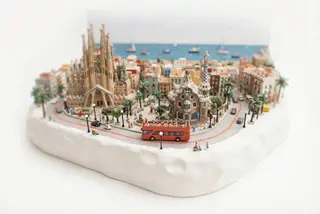
Miniature model of Athens with an orange sightseeing bus

The buses run in all weather, according to the operator. The top deck is open and the lower deck is covered, so in rain everyone moves downstairs and the view shrinks to shopfronts.

Athens is dry for most of the year and wet days cluster between November and February. On a wet day the metro is the better tool: Akropoli station is 2 minutes from the Acropolis Museum.

The marble paths on the Acropolis are slippery when wet, whichever way you get there.

In July and August, ride early or late. The top deck has no shade and afternoon temperatures in Athens regularly pass 35°C.

The first bus leaves stop A1 at 08:30, which gets you to the Acropolis stop at 08:45. In recent summers the Acropolis has closed during the hottest hours of heatwave days, so check before you plan a midday visit.

A full loop is 1 hour 30 minutes in the sun if you stay upstairs. Buses come every 15 minutes, which keeps the wait at unshaded stops short.

Miniature model of Barcelona with an orange sightseeing bus

The top deck is open. The operator's pages say nothing about a rain cover, so assume that in a shower everyone moves downstairs, where there are fewer seats and smaller windows.

Barcelona's rain tends to come in short heavy bursts in autumn, and October is one of the wetter months. On a wet day ride the long stretches (Montjuïc, the upper Blue Route) from the lower deck and keep the Eixample stops for when it clears.

Tickets are not tied to a date when bought from the operator: they can be used within 180 days of purchase.

From June to September the open top deck has no shade for most of a 2-hour loop, and the seafront section from the World Trade Center to the Fòrum is fully exposed. Ride before 11:00 or after 17:00, and bring water and a hat.

Queues are longest at Plaça de Catalunya, where both routes start. Boarding at the second or third stop (Casa Batlló, or Plaça d'Espanya on the Red Route) usually means a shorter wait, though the upstairs seats may already be taken.

The operator says frequency varies between 10 and 25 minutes with the season, and summer is the busy end.

Miniature model of Berlin with an orange sightseeing bus

All buses have convertible roofs. The operator runs them open-top in spring and summer, and in the colder months or in rain the roof is closed, so you stay dry on both decks.

Waiting is the problem in bad weather: buses come every 25 to 30 minutes and the stops have no signs or shelters. Use the operator's app to see where the next bus is before you leave a museum.

The roof is open in summer and the top deck has no shade for a 2.5 hour loop, so ride early. The first bus leaves at 09:30.

The operator says buses are busiest around noon and that a seat is not guaranteed, so in July and August you may have to let a full bus go and wait another 25 to 30 minutes. Food is not allowed on board.

Drinks in a resealable bottle are.

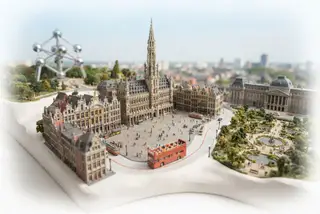
Miniature model of Brussels with an orange sightseeing bus

Sit downstairs in rain. Tootbus describes an open top deck on its Brussels buses and does not promise a cover, so bring a waterproof if you want the upper seats.

The lower deck is enclosed. The bigger problem in bad weather is the stop: with a bus every 20 to 30 minutes you can stand outside for a while.

The Tootbus app shows buses in real time, so wait in a museum or café until one is close. From October the last Red Route departure is 17:00, about the time it starts to get dark in December.

Summer is when the timetable is at its best. From April to the end of August 2026 the Red Route ran every 20 minutes from 09:40 to 18:00 and the Atomium shuttle every hour.

The top deck is open and has no shade, and the Red Route loop is about 1 hour. Tootbus does not run on 21 July, Belgium's national day.

On other days the Atomium and Mini-Europe stop is the busy one, so take a morning shuttle out and come back before mid-afternoon.

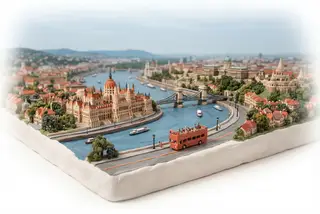
Miniature model of Budapest with an orange sightseeing bus

The top deck is open. Civitatis notes that in bad weather the operator may swap the open-top bus for one with a roof, so a wet day does not have to mean a soaked seat, but you lose the reason to sit upstairs.

From November the cold matters more than the rain, and with service ending at 17:00 the last loops in winter run in the dark. On a cold or wet day M1 and tram 2 keep you under cover for a fraction of the price.

July and August afternoons often pass 30°C and the top deck has no shade on the embankments or on Andrássy út. Do the 1h50 loop at 10:00 from the Basilica, before the heat.

Stop 9 is the one for the Széchenyi Baths, 7 minutes through the park, and the baths are busiest in the middle of the day.

Miniature model of Dublin with an orange sightseeing bus

Expect rain and sit downstairs when it comes, because the top deck is open. Big Bus runs every day, rain or shine, and stops only in extreme weather.

The lower deck is enclosed on every bus. In poor weather the operator may send a closed bus instead of an open one.

A 20 to 30 minute wait at an uncovered stop is the worse part of a wet day. In a downpour the Luas shelters and a €2.00 tram ride are the drier option.

Start at 09:00 from stop 1 in July and August, when the buses fill up by late morning. With one bus every 20 to 30 minutes, a full bus at the Guinness Storehouse means up to half an hour more on the pavement.

The last bus leaves stop 1 at 17:00 and calls at the Guinness Storehouse at 18:02. Book a Storehouse entry time before 16:00 if you plan to ride the bus back.

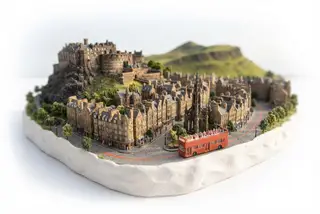
Miniature model of Edinburgh with an orange sightseeing bus

The top deck is open and the weather here turns quickly. Big Bus says it may run a roofed bus in bad weather, though you will not know until it arrives.

Downstairs is enclosed, and from there the Royal Mile is mostly doorways and other vehicles. The loop is short, so the practical answer is to ride it in a dry spell and spend the showers in the National Museum of Scotland at stop 9 or the Scottish National Gallery at stop 5, both free to enter.

From 25 May to 25 October 2026 the Red Route runs every 10 minutes until 17:00, the best frequency of the year. August is the hard month.

The Festival and Fringe crowd the Royal Mile, and Big Bus warns that city events can close stops or cut frequency. Heat is rarely the problem.

Wind on the open deck is, even in July, so bring a layer. Board at George Street or St Andrew Square, the first two stops of the loop.

Miniature model of Florence with an orange sightseeing bus

The top deck is open and the lower deck is enclosed. The operator does not state whether a cover goes over the top deck in bad weather, so plan on sitting downstairs if it rains.

From the lower deck the hill views that justify the ticket are mostly lost. A 24 hour ticket started after lunch is still valid the next morning, which helps if the afternoon turns wet.

On a rainy day the Uffizi and the Accademia are a better use of the money, and both are a short walk from each other.

Ride early or late in summer. The top deck has no shade and the loop takes about 60 minutes.

Buses leave Largo Alinari every 25 minutes from 09:00, and the first two departures are the coolest of the day. The last bus leaves at 17:45, well before a summer sunset, so the bus cannot take you up to Piazzale Michelangelo for the evening light.

Take water on board. Stops such as Piazzale Galileo and Viale Machiavelli have little around them if you get off by mistake.

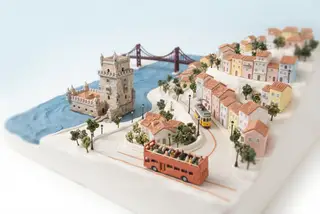
Miniature model of Lisbon with an orange sightseeing bus

Lisbon's rain comes mostly between October and March. The top deck is open, so on a wet day everyone moves to the enclosed lower deck and the view shrinks to a side window.

The bigger problem is the stop: with a bus every 40 minutes you can wait a long time in the rain, and the operator warns that departure times change with weather and traffic. On a wet day the metro and tram 15E are the more comfortable choice.

In July and August the open top deck has full sun for the whole 1h50 loop, and the riverside stretch through Belém has no shade. Bring water and a hat, or sit downstairs.

Buses fill up at Restauradores and Rossio in the late morning, and with a 40 minute interval a full bus is costly. Start at 09:00, do Belém first, and be back in the centre before the afternoon heat.

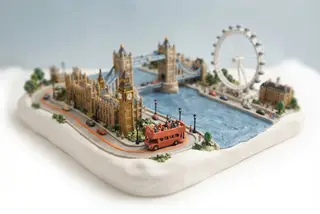
Miniature model of London with an orange sightseeing bus

The top deck is open. Big Bus says that in bad weather it may send out a bus with a roof instead, but you cannot count on which one arrives.

The lower deck is enclosed on every bus and the view from it is ordinary: shopfronts and the sides of other buses. Bring a waterproof if you want to sit upstairs.

The 24 hour Discover ticket helps here, because a tour started at 13:00 can be finished the next morning if the afternoon turns wet.

The open deck has no shade, and a full Red Route loop is 2 hours 30 minutes in the sun if you stay on. Buses are scheduled every 15 to 20 minutes, so a full bus at Westminster or the Tower in July means that much longer on the pavement.

Start before 10:00 and take water. Stop 26 at Buckingham Palace is skipped between 10:00 and 12:30 on Mondays, Wednesdays, Fridays and Sundays because of the Changing of the Guard, which is exactly when most people want it.

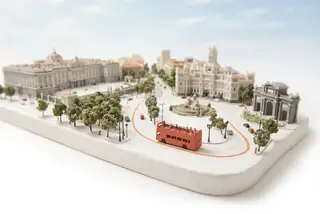
Miniature model of Madrid with an orange sightseeing bus

The upper deck is open, but the buses have a sliding roof that staff pull across when it rains, so the top deck stays usable. The operator does not refund tickets for bad weather.

Madrid winters are dry and cold, around 10°C at midday in January, and the low-season timetable is thin: Route 1 every 30 to 40 minutes and a last loop at 17:05. In that season the bus is mostly a way to sit down and look.

The metro is warmer and quicker.

July and August afternoons regularly pass 35°C and the top deck is in full sun on the Castellana and the Paseo del Prado. Ride before noon or after 18:00.

In high season Route 1 runs until a last full loop at 19:15, so an evening ride is possible. Buses have up to 61 seats and the operator says a seat is not guaranteed at peak times.

If a bus is full you wait for the next one, which on Routes 2 and 3 means another 35 minutes. Board at Neptuno, the first stop of all three routes, to get a place upstairs.

Miniature model of Milan with an orange sightseeing bus

The top deck is open and the lower deck is enclosed. The operator does not state whether the top deck is covered in bad weather, so expect to sit downstairs when it rains.

Waiting is the bigger problem in the wet: about 50 minutes between Red line buses and 90 between Green line ones. On a rainy day the metro is the better tool, since Duomo, Cairoli and Montenapoleone stations are each within 2 minutes of a bus stop on this list.

A 24 hour ticket started after lunch is still valid the next morning.

Start early in summer and use the Yellow or Blue line first. The Yellow line leaves Castello from 09:50 and the Blue line leaves the Duomo from 10:00, while the Red line does not start until 11:40.

The top deck has no shade and the Green line loop lasts 80 minutes. From June to September a night tour leaves Castello at 19:30 and 20:45 on Saturdays and Sundays.

It costs €19 on its own and is included with a 72 hour ticket valid on those days.

Miniature model of Munich with an orange sightseeing bus

Take the loop for the commentary on a wet day, not for the view. The operator describes its buses as open double-deckers and does not say how the top deck is covered in rain.

Civitatis notes that a bus with a roof may replace the open one in bad weather. The lower deck is always enclosed.

A 24 hour ticket started at 14:00 is still valid the next morning, which helps if the afternoon is washed out. Munich's covered alternatives are close to the stops: the Residenz at stop 7 and the Deutsches Museum at stop 5.

In July and August, do the loop first thing. The first bus leaves Karlsplatz at 10:00 and the open deck has no shade.

With a bus every 20 to 30 minutes, a full one at Marienplatz can mean half an hour on the pavement in the Tal. Stop 4 at the Eisbach is the place to get off on a hot day, because the English Garden starts there.

The Orange Tour runs only every 30 to 60 minutes, so plan Nymphenburg around its timetable.

Miniature model of New York with an orange sightseeing bus

Take the top deck only if you are dressed for the weather, because it is open. The lower deck is enclosed, and from it you see storefronts and traffic instead of skyscrapers.

Big Bus runs every day except Thanksgiving and 31 December, and it suspends tours only in severe weather. The 24-hour clock starts when you activate the ticket in the Big Bus phone app, so wait until the sky clears before pressing the button.

Ride before 11:00 in July and August, because the top deck has no shade. A full Downtown Loop is 90 minutes in the sun if you stay on.

Buses come every 30 minutes, so a full bus at Times Square or the World Trade Center means half an hour on the pavement. The first departure from stop 1 is at 09:00 and is the easiest one to get a top deck seat on.

Luggage is not allowed on board, so leave bags at your hotel.

Miniature model of Paris with an orange sightseeing bus

The top deck is open, so in rain you ride downstairs with the view cut to side windows. Big Bus describes its Paris buses as air-conditioned electric vehicles, and the Civitatis voucher notes that in bad weather the open-top bus may be swapped for one with a roof.

From October the top deck is cold once the bus picks up speed along the quays, so take a jacket. On a wet day the metro and the covered museums at stops 2 and 4 are the better plan.

There is no shade on the top deck and the loop takes 2 hours 15 minutes, so in July and August ride the first buses at 09:45 and get off for the middle of the day. Queues to board are longest at stop 8 by the Eiffel Tower.

In the summer timetable (30 March to 27 September 2026) the Night Tour left at 21:30. From 28 September it leaves at 20:30.

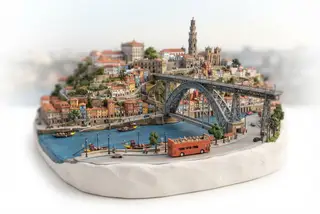
Miniature model of Porto with an orange sightseeing bus

Check the forecast before you validate, because the ticket's clock starts at first use. The vouchers are valid for 12 months, so you can wait for a dry day.

The buses are open-top double-deckers and City Sightseeing's Porto page does not say whether part of the top deck is covered. The Red Line runs along the Atlantic seafront between Castelo do Queijo and Foz, where the top deck is exposed to wind off the sea.

In winter the last departures are 17:30 on the Red Line and 17:15 on the Blue Line, so a wet morning leaves little time to catch up.

Ride the Red Line before midday in July and August. From May to September it runs every 20 minutes instead of 25, with departures from 09:30 to 18:30.

The top deck has no shade on the long Avenida da Boavista stretch between Casa da Música and the sea. The Blue Line stays at every 30 minutes all year, with summer departures from 09:45 to 18:15.

The night tour included in the 48 hour ticket leaves at 21:00 from May to August.

Miniature model of Rome with an orange sightseeing bus

The upper deck is open, and the lower deck is enclosed with far fewer seats and a worse view. In steady rain the bus becomes a slow way to move between stops that are already a walk from the sights.

October and November are Rome's wettest months, so check the forecast before activating a 24-hour ticket, and keep in mind that from November the combined frequency drops from 15 to 25 minutes.

From June to early September, afternoon temperatures in Rome regularly pass 30°C and the top deck has little shade when the bus is stuck in traffic around Piazza Venezia. Ride the loop at 09:00 from Terminal A or after 17:00.

Carry water for the waits at Circo Massimo and Lungotevere Tor di Nona, which are 15 minutes at best. The city's drinking fountains, the nasoni, are free.

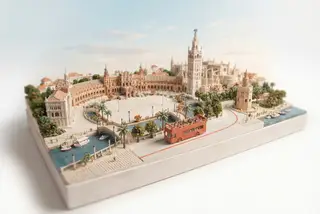
Miniature model of Seville with an orange sightseeing bus

If it rains, wait a day. The ticket runs for 24 hours from first use, and City Sightseeing says its vouchers are valid for 12 months.

The buses are open-top double-deckers and the operator's Seville page does not say whether part of the top deck is covered. The lower deck is enclosed.

On a cold or wet evening, note that the wait between buses rises from 30 minutes to as much as 40 after 18:00.

Use the bus early or late in July and August, not in the middle of the day. The top deck is open to the sun and the full loop takes 75 minutes.

Buses leave stop 1 every 20 minutes between 11:25 and 12:45, the tightest part of the timetable. After 18:00 the gap widens to 35 or 40 minutes, with the last departure at 21:00.

From 1 June to 30 September the Triana guided walk on the 48 hour ticket moves from 17:30 to 20:30.

Miniature model of Vienna with an orange sightseeing bus

The buses are open-top double-deckers. Big Bus states that in bad weather the open-top bus may be swapped for one with a roof.

Vienna in October is often around 10 to 14°C by day and colder on a moving top deck, and from November it is cold enough that most people ride downstairs, where the view is through side windows only. With waits of 20 to 30 minutes at open stops, a wet day is a poor day to activate a ticket.

July and August afternoons often reach 30°C and the top deck has little shade on the Danube section of the red line. Ride the red loop from Walfischgasse at 09:30 and save indoor stops such as the Kunsthistorisches Museum for the early afternoon.

Schönbrunn is at its busiest between 10:00 and 14:00, so taking the first blue bus at 09:45 puts you at the palace by about 10:10.

More guides