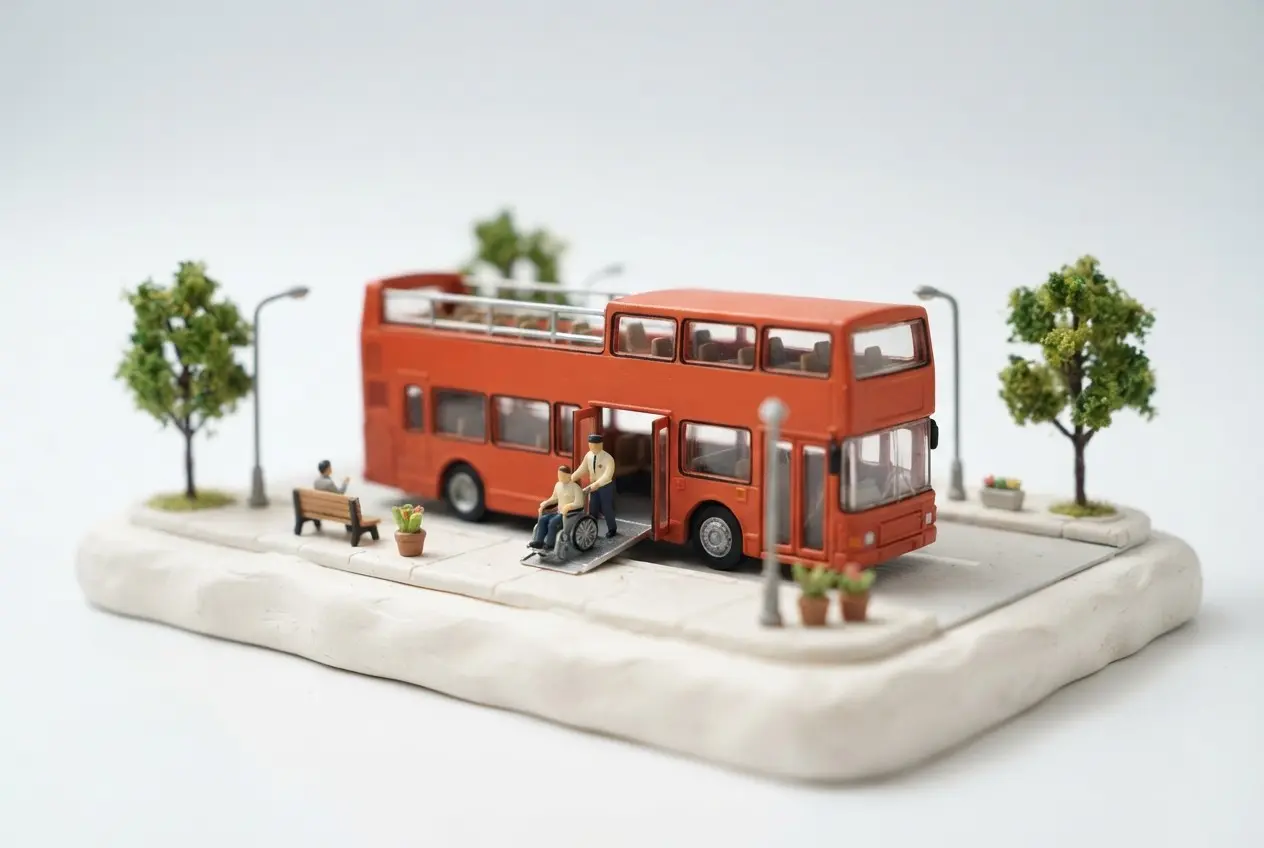
The bus is wheelchair accessible, with one condition. City Sightseeing says wheelchair users must be able to get on and off the bus without help, for safety reasons.
It adds that most buses have easy access but that boarding is harder when the bus is crowded. The sightseeing boat is not wheelchair accessible and has two steps.
For people who walk but tire fast, six of the ten main sights are within 7 minutes of a stop. Dam Square is a 13 minute walk from the nearest stop, the Begijnhof 16 and the Anne Frank House 12, and trams get closer to all three.
Sights of Athens says all its buses are low-floor with a designated wheelchair space. The top deck is reached by stairs, so wheelchair users ride on the covered lower deck.
Nine of the ten main sights are within a 7 minute walk of a stop, which helps anyone who cannot walk far. The Acropolis itself is a climb on uneven marble from the stop, and it has a lift on the north slope for visitors with reduced mobility.
Metro stations on lines 2 and 3 have lifts, so the €4.10 day ticket is a realistic alternative for many wheelchair users.
Every Barcelona Bus Turístic vehicle has an access ramp and a wheelchair space on the lower deck, according to the operator. The top deck is reached by stairs only.
Passengers with more than 33% disability pay the senior price, €25.20 for 24 hours online. For people who cannot walk far the bus is useful on Montjuïc, where stops sit at the door of the MNAC, the Fundació Miró and the Olympic Stadium.
It is much less useful for Park Güell (900 metres uphill from the stop) and the Gothic Quarter, which is pedestrian and about 8 minutes from Plaça de Catalunya. The metro is step-free at most stations, but not all.
This is one of the better hop-on hop-off buses for wheelchair users. Every bus has a ramp and one wheelchair space, and the operator holds the German Travel for All barrier-free certificate.
With only one space per bus and a bus every 25 to 30 minutes, you may have to wait for the next one. The upper deck is reached by stairs.
For people who cannot walk far, the Classic Tour stops within 4 minutes of the Brandenburg Gate, the Reichstag, Museum Island, the TV Tower and Checkpoint Charlie.
Tootbus's 2026 route map marks the buses as wheelchair accessible. It puts the wheelchair symbol on four of the six Red Route stops: Gare Centrale, Poelaert, Luxembourg and Place Royale.
The Grand-Place / Manneken Pis and Cinquantenaire stops do not carry it. On the Blue Shuttle the symbol is on Gare Centrale, Atomium and De Brouckère, but not Rogier.
For people who cannot walk far, nine of the ten main sights are within 7 minutes of a stop. The bus also saves the climb from the Grand-Place up to Place Royale and the Palais de Justice.
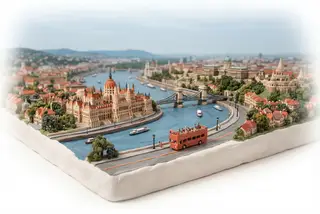
Big Bus says most of its Budapest buses are wheelchair accessible and asks passengers to contact it for details before travelling, so confirm for your date. For people who cannot walk far the bus solves the two awkward climbs: stop 14 is on top of Gellért Hill, and stop 16 at Várkert Bazár has escalators and a lift up to the palace terraces.
On the BKK side, metro line M4 and the low-floor trams on lines 4 and 6 are step-free, but M1 under Andrássy út has stairs at most stations.
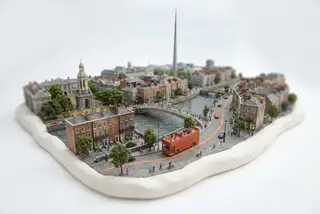
Check before you travel if you use a wheelchair. Big Bus says 85% of its Dublin buses are wheelchair accessible, so roughly one bus in seven is not.
The top deck is reached by stairs, and passengers who cannot climb ride downstairs. For people who can walk a little but not far, eight of the ten main sights are within a 7 minute walk of a stop.
Kilmainham Gaol is the exception, 14 minutes from stop 17. Luas trams have level boarding at every stop and cost €2.00 a journey.
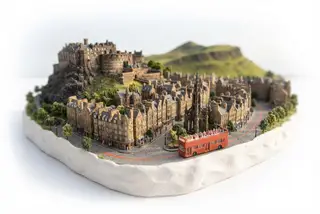
Big Bus says most of its Edinburgh buses are wheelchair accessible and asks you to get in touch before travelling to confirm. The top deck is up a staircase.
For anyone who can walk on the flat but not uphill, this is a city where the bus earns its fare: stop 6 on George IV Bridge is level with the Royal Mile and 2 minutes from St Giles' Cathedral, and stop 12 is 3 minutes from the Holyroodhouse entrance. The castle is the exception.
It is a 6 minute climb from stop 6 over cobbles and across the esplanade, and the bus does not go up Castlehill.
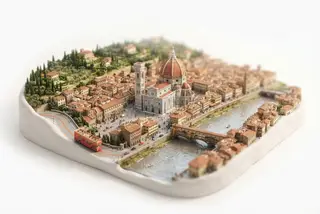
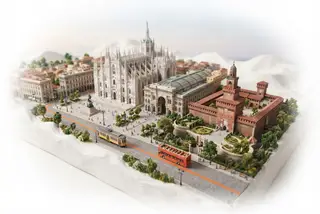
Wheelchair users can ride, with limits. The operator's policy allows a wheelchair only on buses fitted with a ramp and a dedicated space, and each bus is approved for one wheelchair.
The passenger must use the on-board belt and lock the chair's brakes. A passenger with a certified disability of 75% or more rides free when travelling with a paying companion.
The top deck is reached by stairs. For people who can walk a little, note the distances: the nearest stop to the Duomo is 9 minutes away and Palazzo Pitti is 13 minutes from a stop.
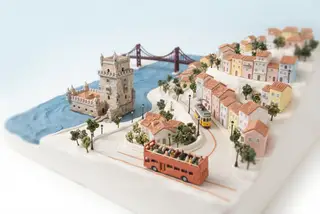
The operator says most of its hop-on hop-off buses have access ramps but some do not, so ask at the Yellow kiosk in Praça do Comércio or call +351 218 503 225 before you rely on it. The tourist trams have three high steps and no ramp.
The bus helps people who cannot walk far on the Belém side, where stops 10, 11 and 12 are 2 to 4 minutes from the monuments on flat ground. It helps less in the old town: the castle is 11 minutes uphill from the Graça stop, and public bus 737 goes closer to the gate.
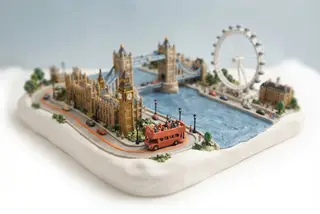
Big Bus does not give a flat yes for London. It asks wheelchair users to contact it before travelling with the width and weight of the chair so it can confirm a space, and it does not take mobility scooters.
The top deck is reached by a staircase, so anyone who cannot climb rides downstairs. For people who can manage a few steps but not long walks, the bus does solve a real problem: eight of the ten main sights are within about 500 metres of a stop.
TfL buses are the cheaper fallback, and every one has a ramp and a wheelchair space.
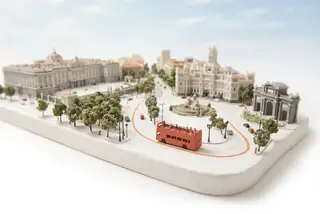
All Madrid City Tour buses have a ramp at the rear door and one wheelchair space on the lower deck, according to the operator. Each bus takes one wheelchair at a time, and Civitatis asks you to state it in the booking and travel with a companion.
The top deck is reached by stairs. For visitors who can walk only short distances the bus does well here: all ten sights in our list are within 5 minutes of a stop.
The exception is Plaza Mayor, where the stop is 400 metres away at Calle de Toledo 55 and the street climbs gently towards the square.
Wheelchair users can ride, with limits. The operator's policy allows a wheelchair only on buses fitted with a ramp and a dedicated space, and each bus is approved for one wheelchair.
The passenger must use the on-board belt and lock the chair's brakes. A passenger with a certified disability of 75% or more rides free when travelling with a paying companion.
The top deck is reached by stairs. For people who cannot walk far the stops are well placed: nine of the ten sights on this page are within 7 minutes of one.
Phone before you buy if you use a wheelchair. The operator's website does not say whether its buses have a ramp or a wheelchair space, and gives +49 89 54907560 for questions.
The top deck is reached by stairs on any double-decker. For people who walk but not far, the Green Tour puts eight of the ten main sights within a 7 minute walk of a stop.
MVV is the dependable fallback: trams and city buses are low-floor and most U-Bahn and S-Bahn stations in the centre have lifts.
Big Bus says its whole New York fleet is wheelchair accessible. Each bus has a lift with a limit of 650 pounds (295 kg).
The top deck is reached by stairs, so passengers who cannot climb ride on the lower deck. Big Bus asks for 48 hours' notice if you need any other arrangement.
For people who can walk a little but not far, six of the ten main sights are within 7 minutes of a Downtown Loop stop. MTA buses are the cheaper fallback, and every one has a ramp or lift.
Big Bus says most of its Paris fleet has wheelchair access on the lower deck and asks you to contact them before travelling. The Civitatis voucher adds that buses have access ramps and recommends boarding at stop 1 if you need help.
The top deck is reached by a staircase. For anyone who cannot walk far, the bus stops within 5 minutes of the Eiffel Tower, the Louvre, Notre-Dame, the Arc de Triomphe, the Musée d'Orsay and the Opéra, which the older metro lines cannot match because many of their stations have no lift.
Ask City Sightseeing before you book if you use a wheelchair. Its Porto pages carry no accessibility statement, although the Civitatis listing for the same bus says it is wheelchair accessible when you say so at booking.
The Gray Line bus is listed as not wheelchair accessible. For people who can manage steps but not hills, the bus removes the two worst climbs in the city: river to Batalha and river to Serra do Pilar.
Nine of the ten main sights are within a 7 minute walk of a stop, though the walk from Jardim do Morro down to the Gaia cellars is steep. Metro line D reaches Jardim do Morro from São Bento for €1.40.
The operator lists the service as having facilitated access for disabled people, and Civitatis states it is wheelchair accessible with an accompanying person required. Check with the staff at Terminal A before boarding, as the operator publishes a separate accessibility policy rather than a per-bus guarantee.
For people who cannot walk far, the weak points are the distances after you get off: 12 minutes from Circo Massimo to the Colosseum, 13 from the Tiber stop to St Peter's Square, 10 from Piazza Barberini to Trevi, all partly on cobblestones.
City Sightseeing states that its Seville buses are wheelchair accessible. Civitatis asks you to say so when you book.
The top deck is reached by stairs, so wheelchair users ride on the lower deck. Seville is flat, which helps, but the bus does not go into the old centre: the cathedral is 7 minutes from stop 1 and the Alcázar 8.
For a short hop, the T1 tram stops at the Archivo de Indias, between the cathedral and the Alcázar.
Big Bus says most of its Vienna buses are wheelchair accessible and asks passengers to contact it for details, so confirm before you buy if you need the ramp. The top deck is reached by a narrow staircase.
For people who cannot walk far, the bus is useful at Schönbrunn, the Upper Belvedere and the museums on Burgring, all within 4 minutes of a stop. It helps less in the old town: St Stephen's Cathedral is 9 minutes from the nearest stop and buses cannot enter the pedestrian streets.